 Location



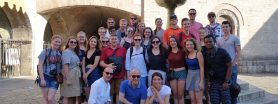 In Italy it is easy to come across a medieval village, but it’s not every day that you visit one of the most beautiful historical re-enactments in the country. The students of the Intensive Italian Program had this opportunity in Bevagna, a few kilometers from Perugia, where the Gaite Market takes place every year. The purpose of this event is to faithfully recreate the lives of the inhabitants of Bevagna between 1250 and 1350, demonstrating the activities that took place in the past. The whole village participates in this festival by reopening the old “botteghe” such as the paper shop, the candle factory and the clothes dyeing service.
Thanks to the guided tour by Professor Giampiero Bevagna, the students retraced the history of this enchanting Umbrian medieval village. A church built on a Roman Temple and a house in the shape of a Roman amphitheater were among the various attractions visited. Also, the outside church walls had ancient units of measurement on them, which helped merchants and buyers in their transactions.
The evening ended with a special medieval dinner, where students ate dishes prepared with ingredients and spices that constituted the diet of the locals in the Middle Ages—so no pasta with tomato sauce for them!
See the pictures on our Instagram page!


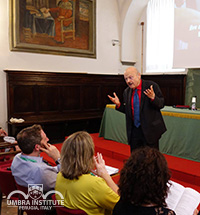 The fourth edition of the biennial Perugia Food Conference took place June 7-10 at at the Umbra Institute in Perugia, Italy. The theme of the conference, organized by the Umbra Institute’s new

 A semester abroad, a course on Business of Wine, an
 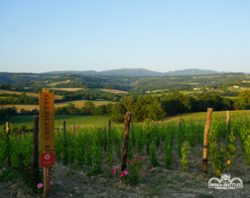 She also took part in Cantine Aperte (“Open Wineries”), a national event that involves hundreds of Italian wineries in late May. This event, which aims to promote the culture of wine in a festive atmosphere, took place during the final days of her time at Roccafiore. What a great way to end an internship!

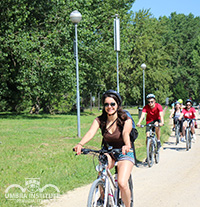 This past Friday, the Umbra Institute’s Intensive Italian summer students hopped on a train and took a bike ride around Lake Trasimeno with a guide, who explained in Italian the history of the Umbrian lake and the area. The guided tour gave students the opportunity to improve their comprehension and speaking skills in a fun and active environment. Biking from Passignano sul Trasimeno to Tuoro sul Trasimeno, the students then took the ferry to Isola Maggiore, one of the three islands in the lake. Along the way, they asked the guide questions in Italian to learn more about the area. Here are some fun historical facts they learned:
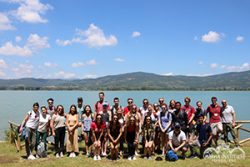 3. St. Francis of Assisi stayed on Isola Maggiore for forty days to fast. He was given a loaf of bread and a rabbit as food, but instead of eating the rabbit he fed it pieces of bread.
