 Location



By Justin Lewis, Umbra Rep Fall 2018
When I first arrived here in Perugia, I tried to have as few expectations as possible in regards to what I would learn and experience. However, being in the Italian Direct Enrollment Program made not holding some preconceived notions hard. Obviously, I expected to learn a lot about the language and culture of Italy through my studies, but whether or not I would encounter other things is what I was unsure about. Little did I know, I would come to a profound realization about the way I thought about language on the first day of class – something that made me aware of my naivety as a native English speaker and was also a reminder of why I love language learning.
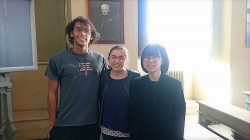
After walking into the room and finding my other classmate from the Umbra Institute, Kelsey, I decided to sit next to her. Shortly after, a girl came and sat down next to us. She introduced herself as Celeste and said that she was from China. She explained that she came to study at the Università per Stranieri because she had always wanted to learn Italian. The interesting aspect of our conversation was that it started out in English, which felt natural to me, but when there were things either one of us did not understand, we automatically switched to speaking in Italian without a thought. The exciting feeling of meeting someone new, especially from another country, kept me from realizing what had just occurred after our conversation ended.
Sometime later in the evening, while reflecting on how the first day of class went, it suddenly hit me that I had immediately assumed Celeste spoke English, without giving it a second thought. While I felt naive for not thinking to ask whether or not she spoke English before starting a conversation, I found it interesting how, as an English speaker, I just assumed someone from another country would know how to speak my language. I also came to another realization: I had been able to communicate with someone who is from the opposite side of the planet in a language that was foreign to both of us. The notion that we were able to have a shared experience and talk about things like culture in our respective nations, without using either of our primary languages one-hundred percent of the time, struck a chord with me. We met both figuratively and somewhat geographically, in the middle and were able to speak to each other. It reminded me that although it may sometimes seem hard to communicate with others, we can always find a middle ground where friendships can grow. In this instance, language was the driver for finding that middle ground and I think this is the beauty of learning another language; it provides opportunities to make new worthwhile connections with people.
Learn more about the Direct Enrollment: Full-Immersion Italian Language and Culture Program at the University for Foreigners here


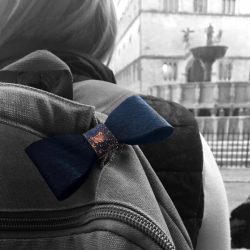 Photo credit: Callie Cinque


 The bulk of my ethnographic research took place on the fertile soil of a legume farm and vineyard overlooking Lake Trasimeno. Although my Italian language skills aren’t strong, I diligently took notes from the caring farmer who demonstrated true passion for preserving Italian culture and sharing his traditions with anyone who would listen. When the Tuscan sun became too overbearing to work in the field, we headed to the kitchen to create classic Umbrian dishes like torta al testo. This deceptively simple flatbread is steeped in historical significance. In Umbria during the 1500s, the reigning Pope raised the tax on salt, making daily cooking a costly task. To rebel, the Umbrian people chose to forego salt in their bread and still do today. The farmer’s family also shared family recipes and techniques for homemade pasta, fagiolini (beans), jams, and even spreads made from lard—all foods deemed taboo according to the latest diet trends. But creating these meals with purpose and care on the land they were grown gave these foods a new perspective. Everything was used or repurposed, and nothing was taken for granted. Food is undoubtedly meant to nourish, but it truly does so much more. Experiencing this holistic view of food was refreshing and a reminder for myself— we need to eat to live, but living to eat is okay too.
